Blog
Bifacial Solar Panels: How Jaipur's Bright, Reflective Terraces Are Unlocking Extra Power Generation
23 Aug 2026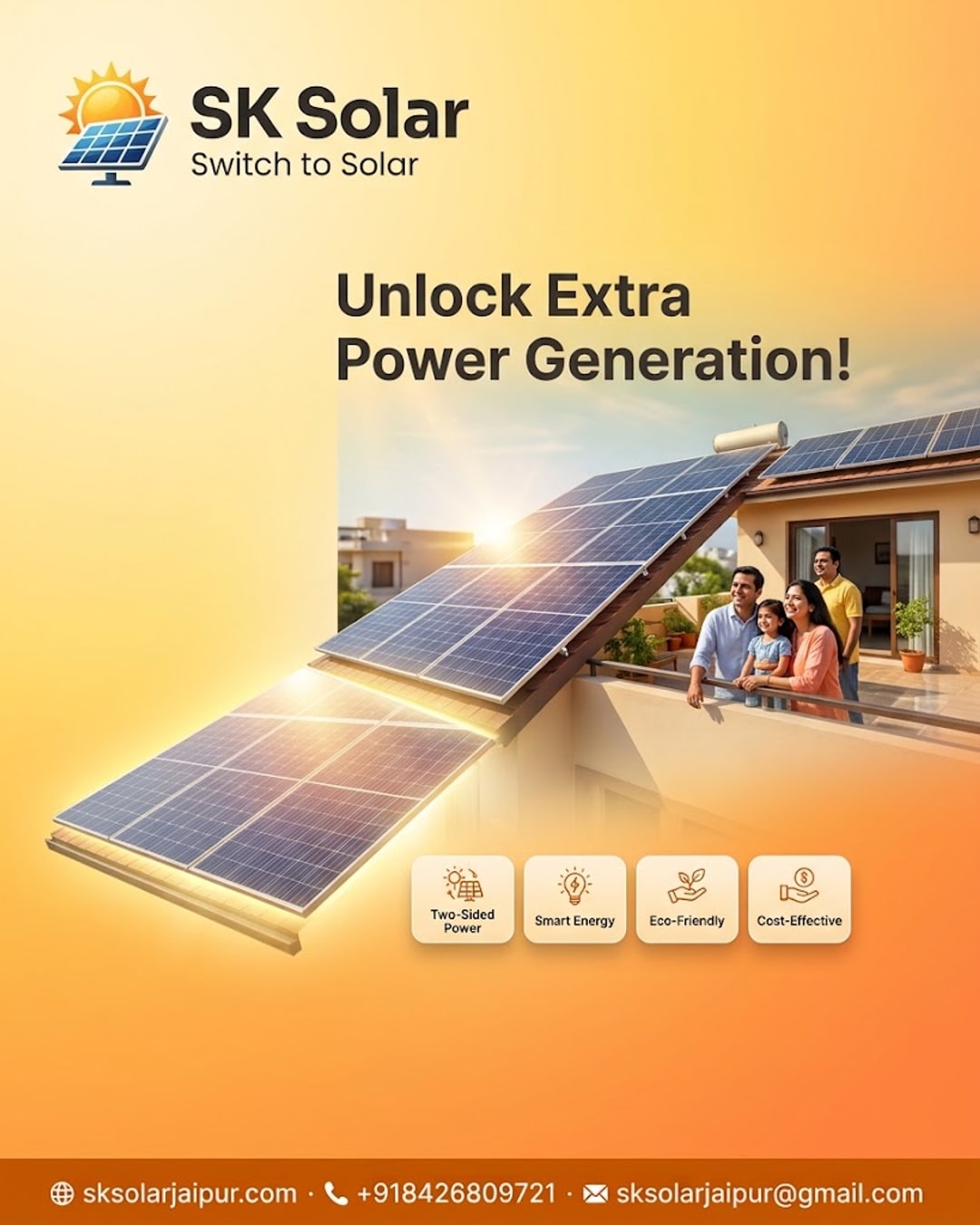
Bifacial Solar Panels: Why Jaipur's Bright Rooftops Make This Technology Worth a Second Look
If you've been researching solar panels lately, you may have come across the term bifacial — panels that generate electricity from both their front and back surfaces. It's one of the more talked-about developments in the solar industry right now, and for a sun-drenched city like Jaipur, it raises an interesting question: could your rooftop benefit from this technology? Here's what it actually means, in plain language.
What Makes a Panel Bifacial A standard solar panel only has active photovoltaic cells facing the sun. A bifacial panel has cells on both sides, so the rear surface can also convert light into electricity — specifically, light that reflects off the ground, a terrace floor, or nearby surfaces back onto the panel. This reflected light is sometimes called albedo light, and how much of it a panel receives depends heavily on what's underneath and around it.
Why Jaipur's Terraces Are Part of the Conversation Rajasthan gets an enormous amount of direct sunlight through most of the year, and many Jaipur rooftops and terraces are finished in light-coloured tiles, white paint, or exposed concrete — all of which reflect more light than darker surfaces. This is exactly the kind of environment where bifacial panels are designed to perform. That said, actual gains depend on panel height, tilt, mounting structure, and the specific reflectivity of your roof, which is why a proper site assessment matters more than assumptions.
Bifacial vs Standard Panels: What to Actually Compare Instead of asking which one is better in general, it helps to ask which one fits your specific rooftop. Standard monofacial panels remain a reliable, well-understood choice for most residential installations. Bifacial panels tend to be discussed more often for commercial and industrial rooftops, elevated mounting structures, solar carports, and ground-mounted systems where the rear side has clear exposure to reflected light. If your panels will sit flush and low with limited rear clearance, the bifacial advantage may be minimal.
What This Means If You're Planning a Solar Installation The key takeaway isn't that bifacial panels are automatically better — it's that solar technology keeps evolving, and the right choice depends on your roof type, mounting height, budget, and how the installer configures the system. This is also why panel selection should never happen before a real site assessment. A qualified EPC team should be looking at your specific roof surface, orientation, and structure before recommending any panel type.
My Take If you're a homeowner with a standard flush-mounted rooftop setup, don't feel pressured to chase bifacial panels just because they're trending — a good quality standard panel, properly installed, will likely serve you just as well. But if you're a commercial or industrial property owner considering elevated structures, solar carports, or a fresh EPC project from the ground up, it's worth asking your installer to walk you through whether bifacial technology makes sense for your specific site. Either way, the technology matters less than the quality of the assessment and installation behind it — that's where the real difference shows up over 20-plus years of use.
🌐 https://www.sksolarjaipur.com/ · 📞 +918426809721 · 📧 sksolarjaipur@gmail.com