Blog
Cold Storage & Dairy Processing Unit Solar Power: Keeping Rajasthan's Perishables Cool Without Draining Profits
25 Aug 2026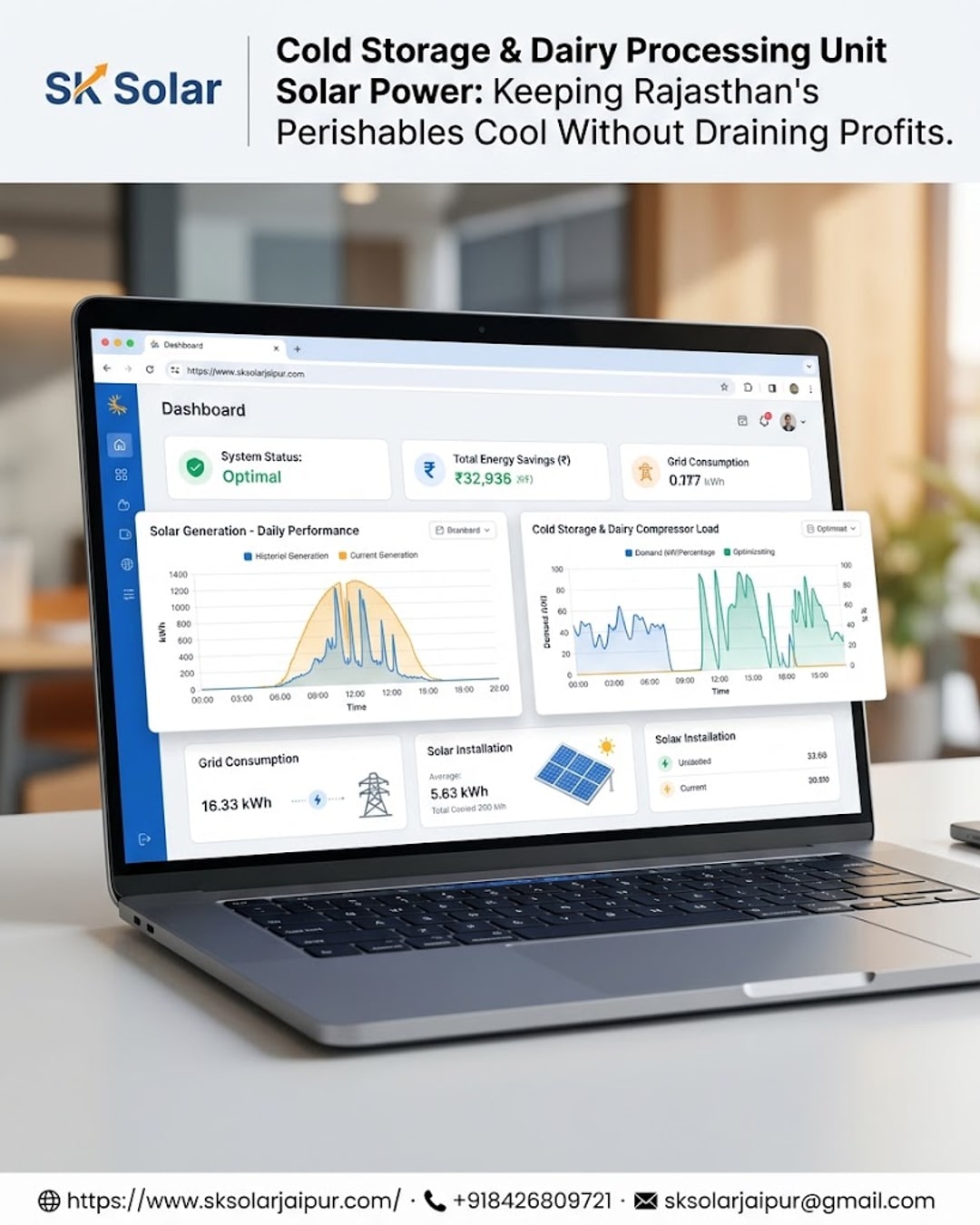
Why Cold Storage and Dairy Units Are a Natural Fit for Rooftop Solar
If you run a cold storage warehouse or a dairy processing unit in or around Jaipur, you already know your biggest cost isn't rent or labor - it's the electricity bill from compressors and chillers that barely ever switch off. That constant, daytime-heavy load pattern is actually one of the best matches for rooftop solar of any industry segment, and it's worth understanding why before you write it off as 'not for us'.
The Load Pattern Problem Nobody Talks About Most cold storage and dairy chilling operations run their heaviest compressor cycles during daylight hours, when incoming milk or produce needs rapid cooling and ambient heat is pushing against your insulated walls. That's precisely when solar panels generate the most power. Unlike a business with a flat, low overnight load, a cold-chain facility's demand curve tends to rise right alongside solar output through the day - so a well-sized rooftop system can offset a meaningful chunk of grid draw during peak generation hours.
What a Proper EPC Assessment Actually Looks At A generic solar quote based only on your roof area misses the point for this sector. SK Solar's approach for cold storage and dairy clients starts with understanding the compressor and chiller load pattern itself - how many units run simultaneously, what your peak versus average draw looks like, and where on the roof the array can sit without interfering with condenser units, exhaust systems or water tanks. From there, the EPC scope covers panel layout, mounting structure, DC bus bars, AC distribution panels, earthing and inverter selection sized to that specific demand.
Space Constraints Are Real, and Solvable Cold storage buildings often have irregular rooflines, ammonia or refrigerant piping running across the roof, and rooftop condenser units taking up prime real estate. This is where realistic panel placement matters - panels need to follow the actual usable roof geometry, sit on properly engineered mounting structures, and never crowd equipment that needs airflow or access for servicing. It's a more technical layout exercise than a simple home rooftop, which is exactly why EPC execution quality matters more here than almost anywhere else.
Ongoing Operations Matter As Much As Installation A cold storage facility can't afford downtime, and neither can a solar system feeding into that operation lose your attention once it's switched on. Regular inspection of panels, wiring and inverter performance keeps the system contributing the way it was designed to - which is why professional O&M support is worth building into your plan from day one, not treating as an afterthought.
My Take If you're running a smaller chilling unit or a single cold room, start with a proper load audit before you commit to anything - don't let anyone quote you a system size off roof area alone. If you're operating a larger dairy processing plant or multi-chamber cold storage warehouse, it's worth treating this as a full EPC project: get the compressor load data mapped, have the roof surveyed for real usable space around your refrigeration equipment, and ask specifically how the installer plans to handle ongoing maintenance once panels are up. Cold-chain operations don't get a second chance if uptime slips, and neither should your solar investment.
🌐 https://www.sksolarjaipur.com/ · 📞 +918426809721 · 📧 sksolarjaipur@gmail.com