Blog
Solar Asset Security: How SK Solar Protects Remote Farmhouse and Industrial Installations from Panel Theft and Cable Vandalism
23 Aug 2026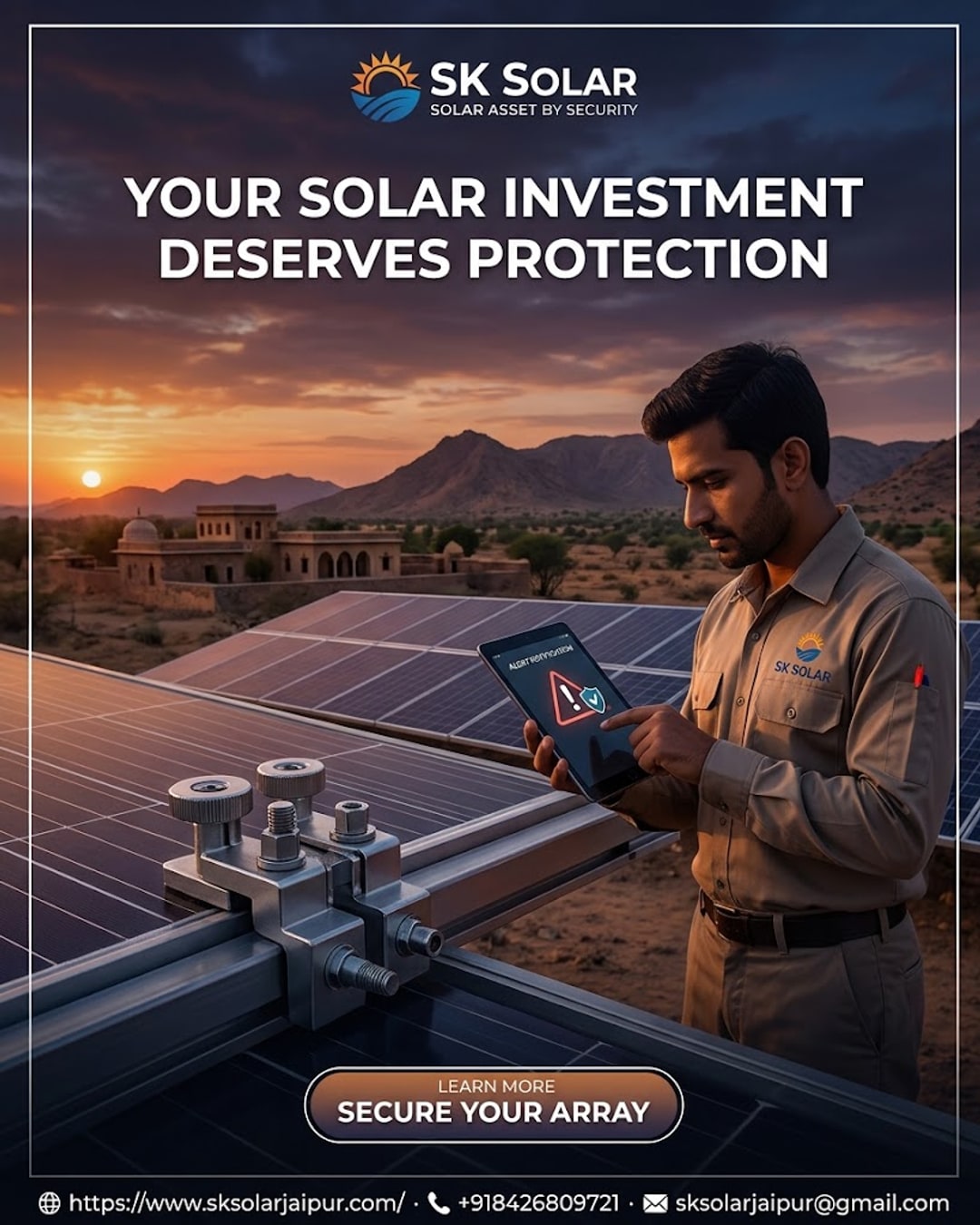
Who's Watching Your Solar Panels When You're Not There?
If you've installed - or are planning - rooftop solar at a farmhouse, warehouse, or industrial unit that isn't staffed round the clock, there's a risk that rarely comes up in sales conversations: panel theft and cable tampering. Unlike a home rooftop with people around daily, remote sites can go unchecked for days, and by the time you notice, the loss is already done. Here's what actually helps, and how SK Solar builds it in from day one.
Why Remote Solar Sites Are Vulnerable Farmhouses, agricultural pump installations, and standalone industrial sheds are often visited only periodically. Panels, mounting frames, and especially copper cabling can be attractive targets when a site sits empty for stretches. The financial loss isn't just the missing hardware - it's the downtime and the cost of re-securing the system afterward.
Tamper-Resistant Mounting Makes a Real Difference Standard mounting clamps are quick to install but just as quick to remove. SK Solar uses locking hardware and anti-theft fasteners that require specific tools to open, which meaningfully slows down or deters casual tampering. It's a small design choice at installation time that pays off over the life of the system.
Cable Routing and Protection Exposed DC and AC cabling is often the easier, faster target compared to panels themselves. Proper conduit routing, secured junction boxes, and concealed cable pathways reduce how much wiring is left exposed and accessible at ground level or along accessible roof edges.
Monitoring That Actually Tells You Something's Wrong The most useful protection isn't just physical - it's information. A generation monitoring setup that tracks daily output means an unusual drop (from a stolen panel, disconnected cable, or damage) shows up as a flag rather than a mystery three months later on your electricity bill. This is especially valuable for farm and industrial owners who can't check the site in person every day.
What to Ask Before You Install If you're evaluating a solar installer for a remote or unmanned property, ask specifically about mounting hardware type, cable routing plan, and whether generation monitoring with alerts is included - not just assumed. It's a short conversation that can save a lot of trouble later.
My take: if your solar site is genuinely remote or unattended for stretches - a farmhouse, a rural pump setup, a standalone warehouse - don't treat security as an afterthought. Ask for tamper-resistant mounting and monitoring alerts as standard, not an add-on, and get it written into your installation scope from the start. It's a small line item next to your total project cost, but it's the difference between catching a problem in a day versus finding out in a quarter.
🌐 https://www.sksolarjaipur.com/ · 📞 +918426809721 · 📧 sksolarjaipur@gmail.com