Blog
The 10-Year Tariff Curve: How Jaipur Businesses Lock In Flat Solar Costs While Grid Electricity Rates Keep Climbing
23 Aug 2026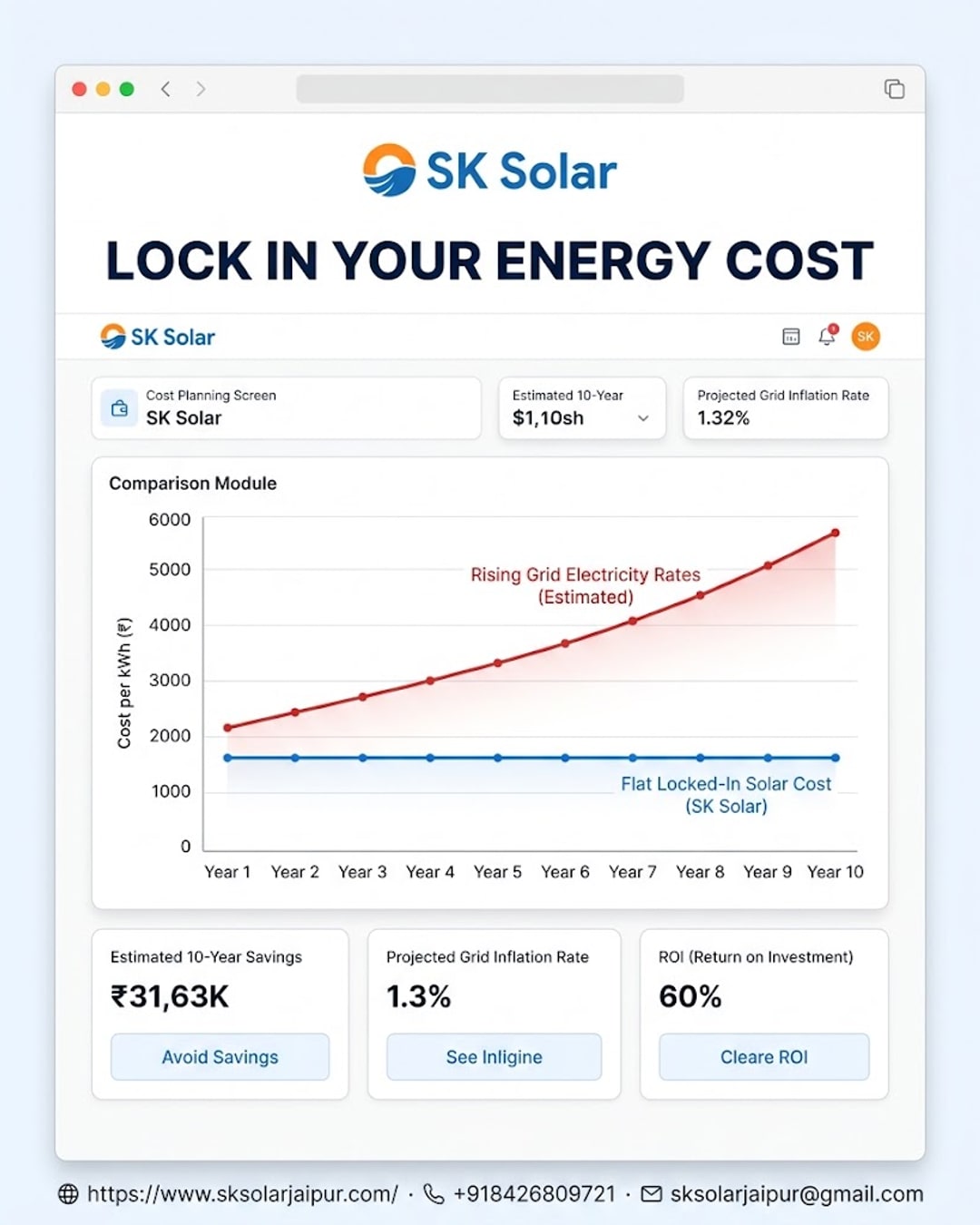
Why Your Real Solar ROI Is a 10-Year Curve, Not a One-Time Bill
Most people evaluating rooftop solar in Jaipur ask a single question - what will I save this month. It's a fair question, but it misses the bigger picture. The real financial story of solar isn't a single bill comparison, it's a cost curve stretched across a decade, and that curve looks very different depending on whether you stay on the grid or switch.
Why Grid Electricity Doesn't Stay Flat
Grid tariffs in Rajasthan, like most states, have historically moved in one direction over time - upward. Fuel costs, transmission upgrades, and regulatory revisions all feed into periodic tariff revisions. A business or household budgeting only for today's rate is often underestimating what year five or year ten will actually cost on the grid.
What a Flat Solar Cost Curve Actually Means
Once a rooftop solar system is installed, the core cost of generating your own power doesn't move the way grid tariffs do. You've already paid for the system - what continues is essentially operations and maintenance, which is far more predictable than a state tariff order. That's the essence of the 10-year curve argument: one line trending up, one line staying largely flat.
Why This Matters More for Commercial and Industrial Roofs
For a shop, hotel, school, or factory, electricity isn't a small household expense - it's a recurring operational cost that scales with growth. When that cost keeps climbing year over year while a competitor's flattens out after going solar, the gap compounds. This is exactly why more commercial and industrial owners in Jaipur are asking SK Solar not just for a quote, but for a full cost-curve comparison before they commit.
How SK Solar Builds This Picture for You
Rather than quoting a single number, SK Solar's approach starts with understanding your current consumption pattern, roof space, and business type - residential, commercial, industrial, or agricultural - and then lays out what your energy cost trajectory could look like with rooftop solar versus staying entirely grid-dependent. This isn't about promising a specific savings percentage; it's about giving you a clearer planning tool.
My Take
If you're the kind of owner who reviews your electricity bill once and moves on, a single-month comparison might feel like enough. But if you're running a business with a 10, 15, or 20-year horizon - a factory, a hotel, a school - you owe it to your budget to see the full curve, not just this month's number. That's the conversation worth having with SK Solar before you sign anything.
🌐 https://www.sksolarjaipur.com/ · 📞 +918426809721 · 📧 sksolarjaipur@gmail.com