Blog
Waterless robotic panel cleaning: how SK Solar's automated dry-brush robots keep Jaipur rooftops dust-free without wasting water
25 Aug 2026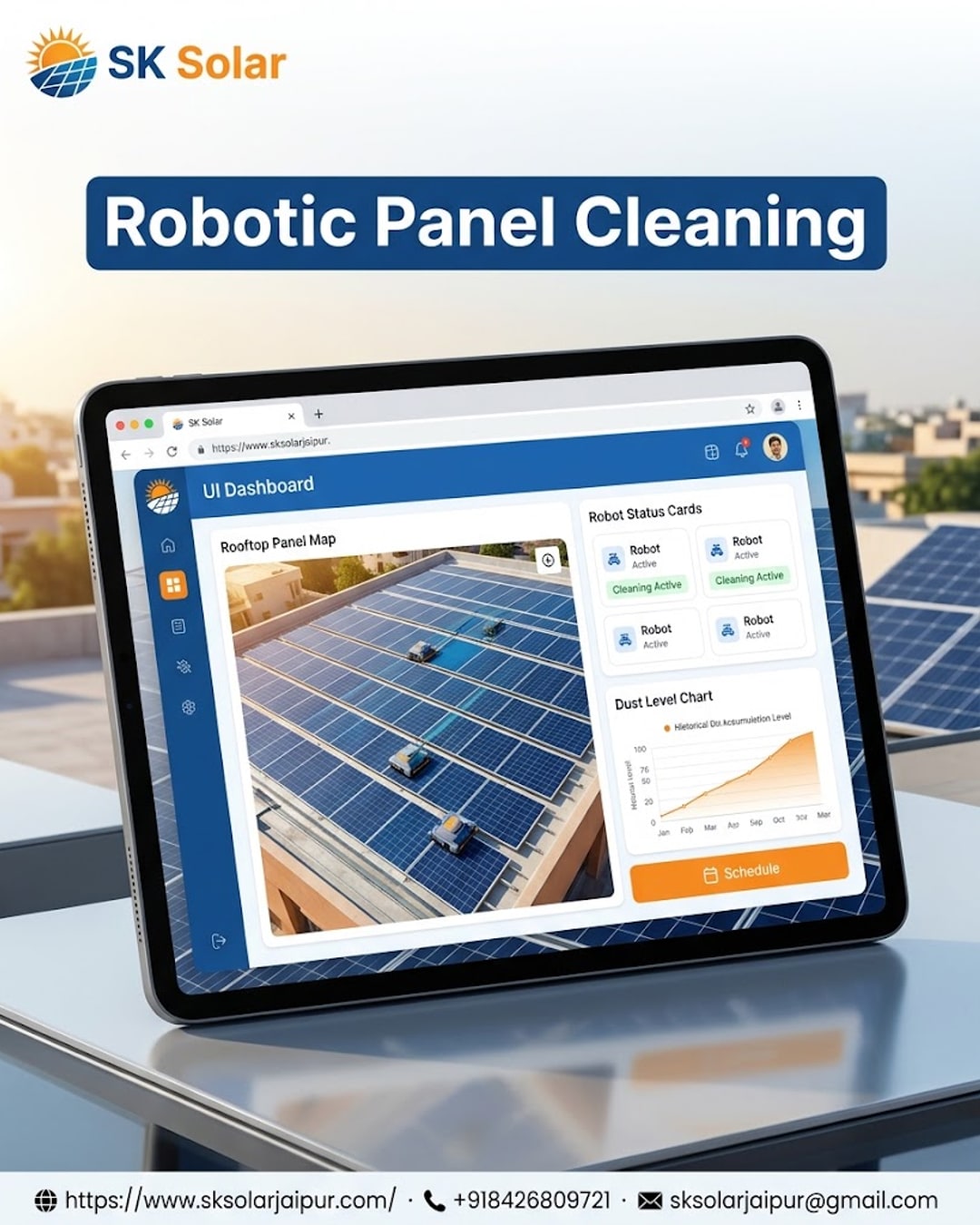
Why Jaipur's Dust Is Quietly Cutting Your Solar Output (And How Robots Are Fixing It)
If you've had rooftop solar for even a few months in Jaipur, you already know the drill - a fine layer of dust settles on your panels within days, and by the time the next cleaning rolls around, your generation has already dipped. Here's how automated waterless robotic cleaning is changing that equation, and whether it makes sense for your setup.
The Dust Problem Nobody Talks About Jaipur's dry climate and dust levels mean panels don't stay clean for long. Even a thin film of dust can reduce how much sunlight actually reaches the photovoltaic cells, and that loss adds up over weeks between manual cleanings. For homeowners this is a minor dip; for factories and warehouses running large arrays, it's a measurable operational cost.
How Robotic Cleaning Actually Works Instead of manual labour with mops, squeegees and buckets of water hauled up to a hot rooftop, robotic cleaning systems use dry brushes or microfiber rollers that glide along the panel surface on a fixed track or self-guided path. They're set to run on a schedule - early morning or late evening, avoiding peak sun hours - and they clear dust without a drop of water.
Water Savings Matter More Than You'd Think Rajasthan isn't a state that can afford to waste water on rooftop maintenance. Traditional panel washing uses a surprising amount of water per cleaning cycle, especially for large commercial or industrial arrays. A waterless robotic system removes that entirely, which matters both for your water bill and for anyone running a facility with sustainability commitments.
Safety Is the Other Half of the Story Sending a person onto a hot tin or concrete rooftop in Jaipur's summer to manually clean panels isn't just inconvenient, it carries real risk - heat exposure, slippery glass surfaces, and working at height. Robotic cleaning removes that risk from your maintenance routine entirely, which is a quiet but important benefit for facility managers who are responsible for worker safety.
Who This Actually Makes Sense For For a small home rooftop system, manual cleaning every few weeks might still be practical and affordable. But for larger residential arrays, commercial rooftops, factories and warehouses where panel count and roof size make manual cleaning slow and costly, automated robotic cleaning starts to look like a smart operational upgrade rather than a luxury.
What To Ask Before You Invest Not every rooftop layout suits every robotic cleaning system - panel spacing, roof access, and array size all matter. Before you commit, get a site assessment done so you know whether a robotic system fits your specific installation, or whether a scheduled manual O&M visit is still the more practical route for your size of system.
My Take If you're running a home rooftop system under a few kW, don't overthink it - a simple scheduled manual clean is probably fine and cheaper. But if you're managing a commercial rooftop, factory, or warehouse array where dust buildup is a recurring headache and sending people up on the roof every month isn't ideal, it's worth getting SK Solar to assess whether a waterless robotic cleaning setup pays for itself in saved water, saved labour, and steadier generation. Talk to them, get the site looked at, and decide from real numbers rather than guesswork.
🌐 https://www.sksolarjaipur.com/ · 📞 +918426809721 · 📧 sksolarjaipur@gmail.com